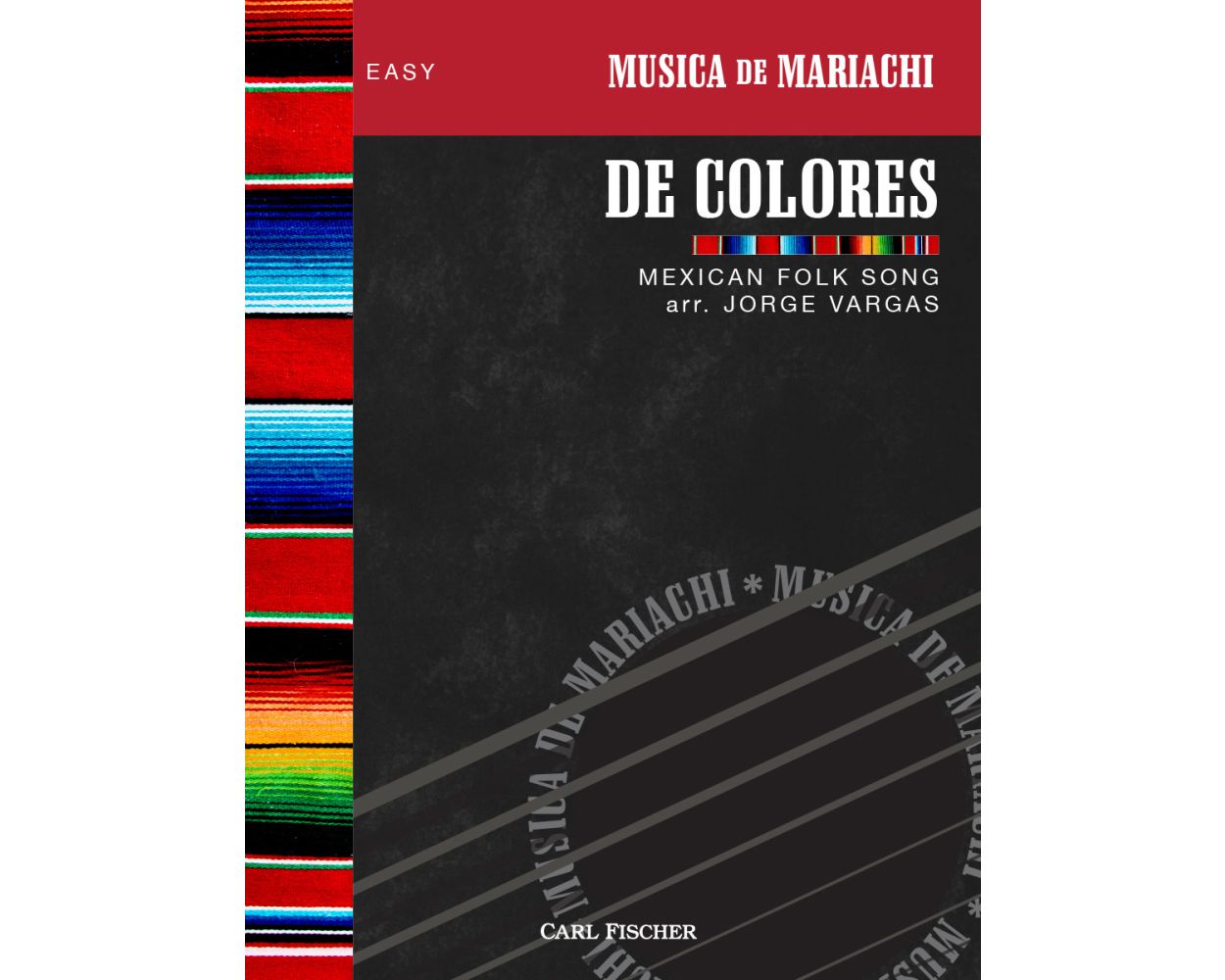
“De Colores” (Of Colors) is a traditional Spanish language song that is well known around the world. Although it is associated with Mexican folk music, the origins are unknown. Celebrating the diverse beauty of all the colors found in nature, “De Colores” has been recorded widely and the lyrics have been translated into numerous languages. Many verses have been added throughout the years, but this arrangement includes two of the most commonly used verses, especially when played with a mariachi ensemble. This arrangement can be performed with or without vocals as the vocal parts are doubled in the trumpets and the violins.
“De Colores” (Of Colors) is a traditional Spanish language song that is well known around the world. Although it is associated with Mexican folk music, the origins are unknown. Celebrating the diverse beauty of all the colors found in nature, “De Colores” has been recorded widely and the lyrics have been translated into numerous languages. Many verses have been added throughout the years, but this arrangement includes two of the most commonly used verses, especially when played with a mariachi ensemble. This arrangement can be performed with or without vocals as the vocal parts are doubled in the trumpets and the violins.
“De Colores” (Of Colors) is a traditional Spanish language song that is well known around the world. Although it is associated with Mexican folk music, the origins are unknown. Celebrating the diverse beauty of all the colors found in nature, “De Colores” has been recorded widely and the lyrics have been translated into numerous languages. Many verses have been added throughout the years, but this arrangement includes two of the most commonly used verses, especially when played with a mariachi ensemble. This arrangement can be performed with or without vocals as the vocal parts are doubled in the trumpets and the violins.
“De Colores” (Of Colors) is a traditional Spanish language song that is well known around the world. Although it is associated with Mexican folk music, the origins are unknown. Celebrating the diverse beauty of all the colors found in nature, “De Colores” has been recorded widely and the lyrics have been translated into numerous languages. Many verses have been added throughout the years, but this arrangement includes two of the most commonly used verses, especially when played with a mariachi ensemble. This arrangement can be performed with or without vocals as the vocal parts are doubled in the trumpets and the violins.