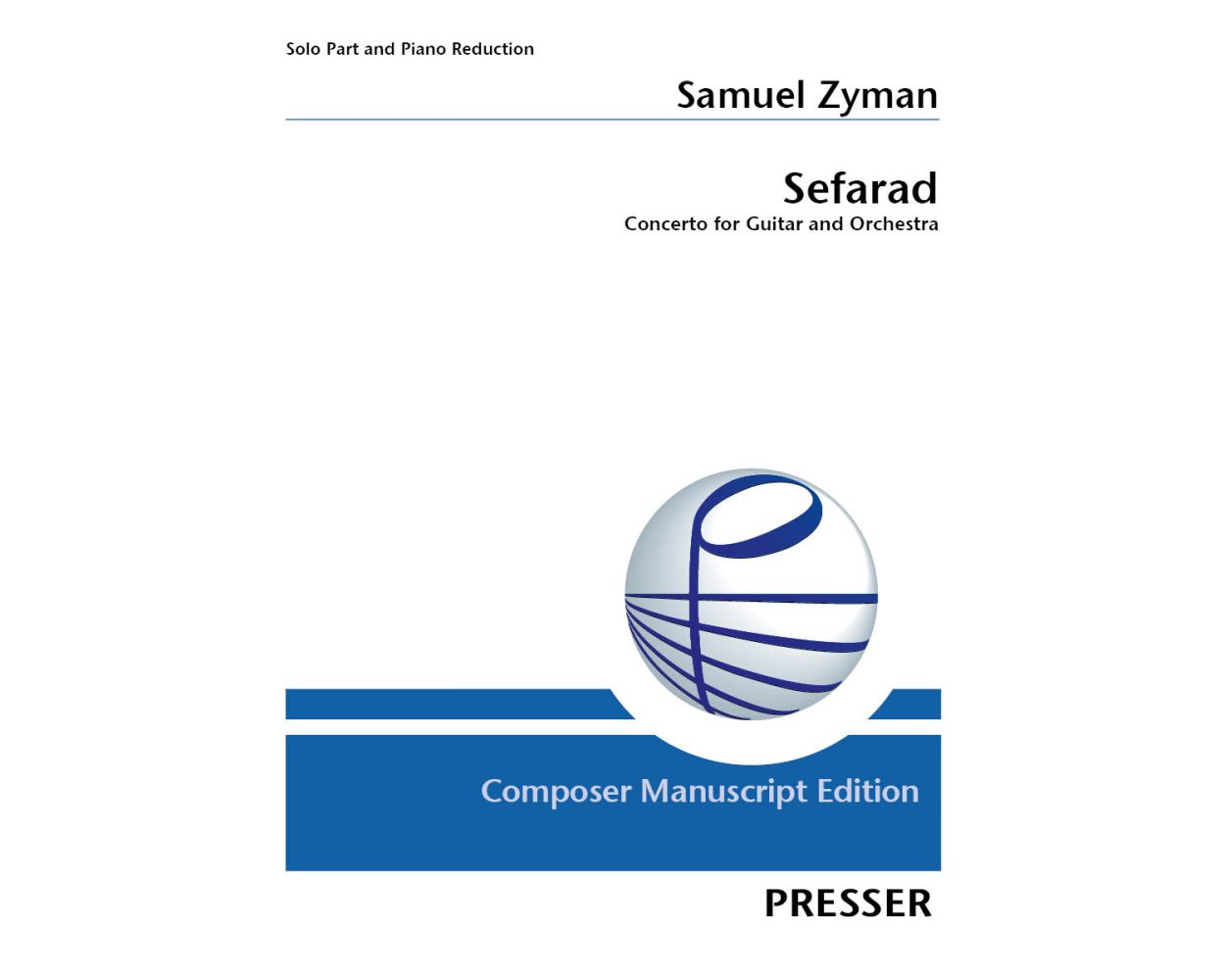
Samuel Zyman(composer), José María Gallardo Del Rey(editor)
Instrumentation
Guitar
Piano
Instrumentation
Guitar
Piano
Instrumentation
Guitar
Piano
$37.99
Custom Print Allow 4-5 days
SKU
144-40777D-PDF
SKU
144-40777
SKU
144-40777D
Made available from composer's original edition
Inspired by Sephardic history and folk music, Samuel Zyman’s SEFARAD is a deep and spirited addition to the guitar concerto repertoire. The solo part in this edition was edited and fingered by José Maria Gallardo del Rey, for whom the concerto was written, and who gave the premiere with the Real Orquesta Sinfónica de Sevilla. The concerto is in three movements, tracing the history of the Jewish population on the Iberian peninsula. The first movement remembers Jews, Christians, and Muslims living harmoniously in Seville, a major cultural center of the time, before the Jews were expelled in the late 15th century. The second movement is a lament for the expulsion itself, and the upbeat and rhythmic third movement hopes for restored cultural harmony and flourishing.
Inspired by Sephardic history and folk music, Samuel Zyman’s SEFARAD is a deep and spirited addition to the guitar concerto repertoire. The solo part in this edition was edited and fingered by José Maria Gallardo del Rey, for whom the concerto was written, and who gave the premiere with the Real Orquesta Sinfónica de Sevilla. The concerto is in three movements, tracing the history of the Jewish population on the Iberian peninsula. The first movement remembers Jews, Christians, and Muslims living harmoniously in Seville, a major cultural center of the time, before the Jews were expelled in the late 15th century. The second movement is a lament for the expulsion itself, and the upbeat and rhythmic third movement hopes for restored cultural harmony and flourishing.
Inspired by Sephardic history and folk music, Samuel Zyman’s SEFARAD is a deep and spirited addition to the guitar concerto repertoire. The solo part in this edition was edited and fingered by José Maria Gallardo del Rey, for whom the concerto was written, and who gave the premiere with the Real Orquesta Sinfónica de Sevilla. The concerto is in three movements, tracing the history of the Jewish population on the Iberian peninsula. The first movement remembers Jews, Christians, and Muslims living harmoniously in Seville, a major cultural center of the time, before the Jews were expelled in the late 15th century. The second movement is a lament for the expulsion itself, and the upbeat and rhythmic third movement hopes for restored cultural harmony and flourishing.